|
|
|
Chair: Dr. Mercedes Arguello Casteleiro (SGAI)

|
|
|
|
Prof Brendan Delaney (Imperial College London)
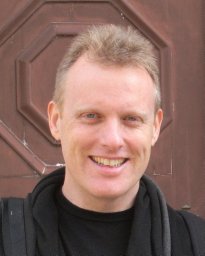 Medical diagnosis after LLMs
Whilst Large Language Models (LLMs) have become both ubiquitous in use and the subject of many grandiose claims, they continue to offer significant risks in regulated purposes such as medical diagnosis. Narrow task ‘diagnosis’ such as interpreting a medical image represents a problem where training data is available, the task is well defined and validation data available. Such systems are slowly entering the market, although the challenge remains system change. Primary care diagnosis is an area where data for both predictive factors and outcomes are sparse and missing not at random, and the outcomes uncertain. Although LLMs offer a potential solution to this uncertainty, their very nature acts against the principles of medical device regulation. This talk will consider both current state of the art in the medical diagnostic field and work brining together bespoke transformer models, knowledge graphs, symbolic reasoning and the learning health system as a potential solution.
I am a faculty member at The School of Convergence Science Digital Foundry, Imperial`s cross-faculty Institute in applied Artificial Intelligence. I also Chair the Faculty of Medicines AI Research Ctte. My work covers Artificial Intelligence in medical diagnosis and learning health systems. I Co-Chair the Medical Research Council AI Strategic Task Group, and am a member of the NIHR MRC Better Methods Better Research oversight group as well as a member of the NIHR Doctoral Fellowship Awards Panel.
|
|
|
|
Mr Anirban Lahiri (Arndit Ltd. and Kainos Ltd., United Kingdom)
 AI in Mental Healthcare
Artificial intelligence (AI) is transforming mental healthcare by improving detection, treatment, and monitoring of conditions such as depression and anxiety. By analyzing data from speech, text, behavior, and wearable devices, AI can identify early signs of mental distress and enable timely intervention. This allows for more proactive and continuous care compared to traditional methods.
AI-powered digital platforms, including chatbots and virtual assistants, deliver accessible mental health support through techniques like cognitive behavioral therapy (CBT), mood tracking, and real-time guidance. These tools expand access to care, particularly for individuals facing barriers such as stigma or limited availability of professionals, while complementing rather than replacing human therapists.
Innovative approaches such as game-based assessment frameworks, like Antarjami, further enhance AI`s role. These systems use interactive and engaging environments to assess cognitive and emotional states by analyzing user behavior, including decision-making and reaction times. They enable continuous, adaptive, and less intrusive assessments, improving user engagement and accessibility.
Game-based frameworks also enable continuous and adaptive assessment. Unlike one-time clinical evaluations, these systems can track changes over time, providing a dynamic picture of an individual`s mental well-being. AI algorithms can personalize game scenarios based on user behavior, making assessments more engaging and tailored. Additionally, such tools can be deployed remotely, increasing accessibility to mental health screening in underserved or remote populations.
AI also supports clinicians by enabling personalized treatment and risk prediction. However, challenges such as data privacy, bias, and ethical concerns must be addressed. Overall, AI holds significant potential to make mental healthcare more accessible, personalized, and effective when implemented responsibly.
Anirban Lahiri is a Data Solutions Architect at Kainos and Founding Director of Arndit Ltd. Cambridge, United Kingdom. Anirban has been developing advanced technology in the Computing Industry over more than 2 decades spanning 7 countries across 3 continents (US, Europe and Asia). He has worked for many multinationals and is credited for taking numerous ideas from the concept to successful product launch for companies including Philips-NXP Research, ARM, Siemens, Xaar, Kaleao. He is credited with bringing to market the Big-Little Architecture commonly found in mobile phones and tablets nowadays and the first steps to building an ARM based supercomputer. He has authored more than 10 patents for his inventions and a number of books/book-chapters as well as 30+ articles published in numerous conferences and journals. He is also closely associated with teaching and research at Cambridge University. He holds an MBA from Imperial College London and MS degree from Indian Institute of Technology, Kharagpur. He has also been a Visiting Fellow, at University of Texas, Austin and Stanford University.
|
|
|
|
Dr Marinos Ioannides (Head of Software and AI Medical Devices, MHRA, UK)
 Demystifying AI Regulation
How can you understand the details of AI regulation? What are the contradictions that can trap the unaware company, and give the innovators the edge? Attend to find out!
Ex MHRA doctor and AI regulatory expert driven to improve patient safety through responsible regulation.
|
|
|
|
Dr Oliver Thomson Brown (Quantum Software Lab, EPCC, University of Edinburgh)
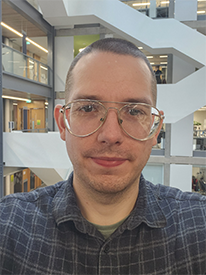 Introduction to Quantum Computing and its Relevance for Biomedical Science
Quantum computers are here, and are publicly available, but what does that really mean? In this talk I will briefly introduce quantum computing, including a discussion of the potential benefits, and the various challenges facing their use in real-world applications. I will also summarise some of the recent quantum computing research in the area of biomedical science.
Dr Oliver Thomson Brown is a Chancellor’s Fellow at EPCC, the UK’s National Supercomputing Centre. He leads EPCC’s Quantum Group, and his research is focused on programming models for hybrid HPC and quantum computing. He also investigates applications, and scalable classical emulation of quantum computing. He is a co-lead of the NQCC-affiliated Quantum Software Lab, and a theme co-lead of QCi3, the national quantum technology hub for quantum computing.
|
|
|
|
Dr. Mercedes Arguello Casteleiro (SGAI)
Hands-on Tutorial on Low-Code AI Agents for Health, Farming, and Food
OpenAI`s GPT models, Google`s Gemini models, and Anthropic`s Claude models are Large Language Models (LLMs) with two major limitations: `their knowledge is frozen at the time of their training, and they can’t interact with the outside world to access real-time data or perform actions`. AI agents go further than LLMs that create complex text, images, and video based on human language interaction. AI agents can use external tools and interact with digital environments. AI agents aim to operate with a degree of independence (agency) and combine multiple AI capabilities.
The era of simple prompts may be over and the new agentic AI era may have arrived. According to the World Economic Forum, AI agents could be worth $236 billion by 2034 and agentic AI could deliver $3 trillion in corporate productivity gains globally over the next decade. The `low code` distinction matters because it is feasible to build a minimal AI agent in just a few minutes with less than 20 lines of python code using some popular open-source agent frameworks. Come along and find out what low-code AI agents may do for health, farming, and food.
Dr Mercedes Arguello Casteleiro has a PhD in Physics and is an elected committee member of BCS SGAI (the Specialist Group on Artificial Intelligence of the British Computer Society). For many years she carried out research as part of the Bio-Health Informatics Group at the University of Manchester. She is interested in Neuro-Symbolic AI and investigating the benefits and drawbacks of low-code/no-code AI with open-source LLMs, including AI agents. She undertook lecturer posts at the University of Buckingham (medical UG), also teaching computer science UG/MSc at University of Southampton and University of Manchester. She is currently working on the TQ-FOODS project funded by SCAF and Quantum ARC.
|
|
|
|
Dr Saihong Li (University of Stirling)
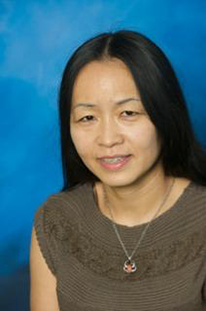 Translating Quantum Food Futures
The World Health Organization (WHO) recognises that “a healthy diet is a foundation for health, well-being, optimal growth and development.” WHO also highlights that healthy diets help protect against malnutrition in all its forms, as well as non-communicable diseases (NCDs), including diabetes, cardiovascular disease, stroke, and cancer.
At the same time, rapid advances in quantum technologies are creating new possibilities across health, agriculture, and food systems. International initiatives such as Quantum for Bio (Q4Bio), supported by up to $40 million in research funding, are accelerating the application of quantum computing to challenges in human health. In the UK, quantum technologies are also recognised as a strategic area for innovation and economic growth, with emerging relevance to agri-food, food safety, nutrition, and sustainability.
This talk argues that quantum-enabled food futures are not only scientific or technological challenges, but also translational and cross-cultural challenges. Drawing on my expertise in translation studies, food communication, and cross-cultural meaning-making, I examine how complex quantum concepts can be translated across disciplines, sectors, cultures, and publics in public health contexts. The talk presents outcomes from the Translating Quantum Food Futures project and shows how translation can support responsible innovation, public understanding, stakeholder trust, and more inclusive food futures and public health.
Dr Saihong Li is a Senior Lecturer in Translation at the University of Stirling. Her research interests span interdisciplinary digital humanities, terminology studies, cross-cultural communication, and translation studies. She has published extensively in these fields, including monographs, edited volumes, and peer-reviewed journal articles. Her work explores the intersections of language, culture, technology, and society, with particular interests in food translation, political discourse translation, interpreting studies, and digital approaches to translation research. She serves as Co-Editor of Perspectives: Studies in Translation Theory and Practice (Taylor & Francis) and General Editor of the Routledge Studies in Global Food Translation book series.
|
|
|
|
Dr Aleksey Kozikov (Newcastle University)
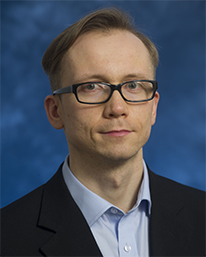 Emerging Opportunities for Quantum Technologies in Food and Health
Quantum technologies are emerging as powerful tools for sensing, measurement and materials innovation. While often associated with advances in physics and engineering, they may also offer new opportunities in areas such as food production, environmental monitoring and health.
This talk will provide an overview of how quantum technologies could contribute to future food and health systems. Topics will include sensing and monitoring, sustainable materials, as well as the challenges involved in translating emerging technologies into practical applications.
Dr Aleksey Kozikov is a Lecturer (Assistant Professor) at Newcastle University, where he leads research in quantum photonics, quantum materials and nanotechnology. His work focuses on quantum light sources, single-photon technologies, two-dimensional materials and emerging applications of quantum technologies. His research interests span quantum sensing, quantum communication, sustainable photonic materials and AI-assisted approaches for materials discovery and device optimisation. He is particularly interested in interdisciplinary applications of quantum technologies in areas including sustainability, food systems, environmental monitoring and future healthcare technologies.
|
|