|
|
|
Chair: Dr. Mathias Kern (SGAI committee, BT)

|
|
|
|
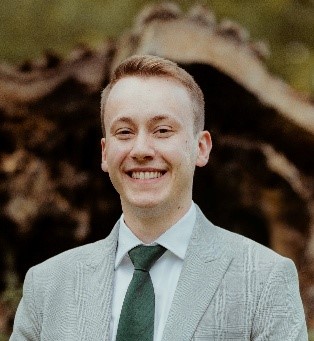
Jack Johns (BT (Digital)) and Dr Adam Ziolkowski (BT (Digital))
 Evolving the SDLC: Our Journey Towards Agentic Software Engineering
Agentic AI is revolutionising many industries, fundamentally changing them beyond how we know them today. No industry knows this better than software engineering, being arguably the current primary focus of most AI labs and by far the biggest AI success story in enterprise so far.
BT started on its GenAI path in 2023 with coding assistants, back when they were `fancy autocomplete`, and have since witnessed their full evolution into autonomous AI agents, leveraging them to generate millions of lines of code per year. With the rapid progress made, both in the models themselves and the harnesses that surround them, BT has continued its efforts in the augmentation of its Software Development Lifecycle, leveraging AI for everything from requirements gathering, to architectural design, to QA and post-deployment maintenance.
In this talk we will explore this journey, discussing where we started with simple coding assistants, through the innovations of agentic AI to where we stand today and what we believe the future to look like, highlighting the challenges that come with building an agentic SDLC.
Jack Johns is an AI researcher at British Telecom. He works within BT’s Software & AI Lab, researching impact that AI can have on the software development lifecycle. Specific research topics include AI-assisted architectural design, human-AI interaction and knowledge management for multi-agent systems. He holds a BSc in Digital and Technology Solutions from the University of Exeter.
Adam Ziolkowski is a Research Manager in Software at BT’s Software and AI Lab. His work focuses on applying AI across the software development lifecycle and advancing the state of the art in AI-assisted software engineering. His interests include software quality, understanding the impact of AI on the SDLC, and improving software systems through AI. He collaborates with industry and academia to translate complex challenges into practical impact. He holds a BSc, MSc, and PhD in Computing Science from the University of East Anglia.
|
|
|
|
Karol Janik (Manufacturing Technology Centre)
 Robotics in the Age of AI: Adoption, Illusion and Direction of Travel
Artificial intelligence is reshaping robotics, but the distance between laboratory demonstrations and reliable industrial deployment still remains substantial. This talk examines how AI is actually being used in robotics today, from perception and adaptive control to emerging vision language action systems, through concrete case studies across manufacturing and other sectors. It highlights where value is already being realised, as well as persistent technical, economic and integration challenges that limit scale. Looking ahead, it explores the trajectory of physical AI and what is realistically achievable over the coming decade. The talk covers a pragmatic view of a fast moving field, separating genuine progress from hype and setting out what it will take to translate advances into consistent real world impact.
Karol Janik is Robotics & Automation Technology Manager at the UK’s Manufacturing Technology Centre (MTC), leading technology strategy and collaborative R&D in robotics, automation and AI.
Over the last 15 years, he has delivered robotics and autonomous systems across a broad range of sectors, including manufacturing, aerospace, nuclear, infrastructure and agritech, focusing on translating advanced technologies into real world industrial impact.
He is General Chair of the European Robotics Forum 2027 which will take place in the UK and plays an active role in the European robotics ecosystem through euRobotics association, contributing to international collaboration and European agenda setting for the field.
He is also Chair of the Robotics & Automation Special Purpose Group for the High Value Manufacturing Catapult (HVMC), an Honorary Senior Research Fellow at the University of Birmingham, and a member of the Department for Science, Innovation and Technology’s College of Experts, contributing to UK policy in robotics, AI and autonomous systems.
|
|
|
|
Ikenna Umeh (BT (Networks))
 Agent Trust and Coordination in Autonomous Multi-Agent Cyber Defence Systems
As AI-driven systems evolve towards autonomous multi-agent architectures, ensuring trust and effective coordination between agents becomes a critical security challenge. This talk focuses on how agents can reliably interact, share intelligence, and make coordinated decisions in cyber defence environments.
It explores practical approaches to establishing trust between agents, securing communication, and orchestrating collaborative actions while maintaining resilience against compromised or untrusted participants.
The session will demonstrate how trust-aware coordination enables scalable, adaptive defence, allowing multi-agent systems to operate as cohesive and secure units in dynamic threat landscapes.
I am a Cyber Defence Research Specialist at BT, working within Security Research and Threat Detection. My work focuses on AI-driven cybersecurity, particularly multi-agent systems, threat intelligence prioritisation, and autonomous defence frameworks. I actively contribute to innovation through patented technologies and lead initiatives that translate advanced research into operational security capabilities. Alongside this, I mentor early-career talent and deliver talks on responsible AI adoption in cyber defence.
|
|
|
|
Alex Mavromatis (Madevo AI)
 Agentic AI: The Good, the Bad, and the Ugly – Three Real-World Use Cases
Agentic AI – autonomous systems capable of reasoning, planning, and acting with minimal supervision – is transitioning from concept to operational reality. This talk examines “The Good, the Bad, and the Ugly” of Agentic AI through three real-world use cases in large-scale operations: telecom networks, railway systems, and stadium fan engagement.
For each domain, the presentation highlights key benefits, implementation challenges, risks, and lessons learned. Attendees will gain practical insights into where Agentic AI delivers genuine value and where caution is still essential.
Alex Mavromatis is a telecoms and AI expert with over a decade of experience in 5G, IoT, and network automation. He previously served as Senior Research Associate at the University of Bristol, where he contributed to major European projects including 5G-INFIRE and 5G Logistics.
Today, as CEO of Madevo, he leads the development of practical Agentic AI solutions for real-world network operations. Alex is passionate about bridging cutting-edge AI research with operational deployments in telecom, transport, and large-scale venues.
|
|
|
|
Dr Keith Dear (Cassi)
 Is Judgement Uniquely Human?
Dr Keith Dear will argue that judgement is not uniquely human, and probability not an objective property of the world, describing how the AI start-up he co-founded, Cassi, is turning these two insights into decision-advantage for customers across multiple industries.
Keith founded Cassi to help people and organisations make better decisions, drawing on a unique career at the intersection of human cognition, artificial intelligence, and high-stakes strategy. He sees Cassi as a ’truth-engine’, and the remedy for many of society, government, and businesses’ modern pathologies in decision-making. Within Cassi, he seeks to build a high-performance culture dedicated to the pursuit of excellence.
Before founding Cassi, Keith served as Managing Director of the Centre for Cognitive & Advanced Technologies at Fujitsu, where he led a transformative portfolio including neurosymbolic AI, digital twin, collective intelligence, data and information fusion, quantum computing and an incubation and accelerator initiative – solving customer challenges across multiple sectors, and deepening the UK and Japan’s strategic collaboration in technology. His transition to deep tech followed his tenure as an Expert Advisor to the Prime Minister at 10 Downing Street. There, he led on science and technology in the Integrated Review of Security, Defence, Foreign & Development Policy, reshaping how the UK government thinks about power in the modern world.
Keith’s strategic perspective is grounded in 18 years as an RAF Intelligence Officer, where he deployed to Afghanistan, Iraq, and Mali, as a peacekeeper in Abkhazia, Georgia and on exchange with the USAF in Las Vegas.
Keith has written, spoken and advised widely at the intersection of business, economics, strategy, technology, defence, national security and geopolitics since 2011, in and out of Government, across the UK, Europe, Japan, and US. Keith is a Global Distinguished Engineer with Fujitsu, and a Visiting Senior Research Fellow at King’s College London He is a Fellow of RUSI, Exeter’s Strategic Studies Institute, Oxford’s Strategy, Statecraft, and Technology Centre, Clare Hall Cambridge’s Industry & Entrepreneurship Fellow, and a Cambridge Judge Business School Director’s Fellow. Keith holds a DPhil in Experimental Psychology (Oxford), an Executive MBA (Cambridge) and a War Studies MA with Distinction (King’s College London) and BA (Hons) in History, Politics and International Relations (Lancaster).
|
|